War Horse Play Script S
Running time146 minutesCountryUnited StatesLanguageEnglishBudget$66 millionBox office$177.6 millionWar Horse is a 2011 American directed and co-produced by from a screenplay written by and, based on 's and its 2007. The film's ensemble cast includes (in his film acting debut), and.Set before and during, it tells of the journey of Joey, a horse raised by British teenager Albert (Irvine), as he is bought by the British Army, leading him to encounter numerous individuals and owners throughout Europe, all the while experiencing the tragedies of the war happening around him.acquired the film rights to the novel in December 2009, with Spielberg announced to direct the film in May 2010. Having directed many films set during the, it was his first film to tackle the events of World War I. Long-term Spielberg collaborators, and all worked on the film as cinematographer, editor, production designer, and music composer, respectively.Produced by DreamWorks Pictures and released worldwide by, War Horse became a box-office success and was met with positive reviews.
This sequel to KUNG FU PANDA, sees Po now living his dream as The Dragon Warrior, protecting the Valley of Peace alongside the Furious Five; but his new life is threatened by the emergence of a formidable new villain who plans to use a secret, unstoppable weapon to conquer China. Kung-fu panda 2 pc game. Single-player, multiplayer. Kung Fu Panda 2 is a video game, loosely based on the film of the same name. The game was released across Nintendo DS, PlayStation 3, Wii, and Xbox 360 platforms on May 24, 2011. The Xbox 360 version requires Kinect. The Wii version uses the uDraw GameTablet. Kung Fu Panda 2 Full PC Game DownloadKung Fu Panda 2 Full PC Game DownloadKung Fu Panda 2 Full PC Game DownloadKung Fu. Kung Fu Panda 2: The Video Game begins where the movie leaves off, as Po and the Furious Five venture out to save Kung Fu from a new evil. DoubleGames, as well as other computer games developers, are ready to introduce their next tremendous project based on the popular Kung Fu Panda 2 movie.
The film was nominated for six including, two and five. Contents.Plot In 1912, a is born in,. At auction, farmer Ted Narracott outbids his landlord Lyons for the, to the dismay of his wife Rose , because the family needs a working horse that can plough the field. Their son Albert , accompanied by his best friend Andrew, names the colt Joey, and teaches him to come when he imitates an owl's call.
The pair form a close bond. Against all odds, the horse and boy successfully plough a rocky field, saving the family's farm.Rose shows Albert his father's medals from the, and gives him Ted's, confiding in Albert that his father carries physical and mental scars from the war.In 1914, as is declared, a heavy downpour ruins the family's crops, forcing Ted to sell Joey to the. Albert is heartbroken and tries to stop the sale but is too late. Captain James Nicholls sees Albert's attachment and promises to look after the steed.
Albert tries to enlist but is too young, and before the company departs, he ties his father's pennant to Joey's bridle and promises the horse that he will find him.Joey bonds with Topthorn, a black horse with whom he is trained for his military role. The horses are deployed to with a under the command of Nicholls and Major Jamie Stewart. They lead a through a German encampment, but the unit is decimated by fire. Nicholls is killed along with almost all his fellow cavalrymen; the Germans capture the horses.Gunther, a young German soldier, is assigned to the care of Joey and Topthorn. When his brother Michael is sent to the front line, Gunther takes the horses and the four of them desert.
The German army soon tracks down the boys and they are shot for desertion; however, the Germans leave without noticing the horses. They are found by a French girl named Emilie. German soldiers arrive at her grandfather's farm, but Emilie hides the horses in her bedroom.
For her birthday, Emilie's grandfather allows her to ride Joey; they run into the Germans, who confiscate the horses. Emilie's grandfather keeps the pennant.By 1918, Albert has enlisted and is fighting alongside Andrew in the. After a British charge into, Albert and Andrew miraculously make it across to the German trench, where a explodes.The Germans use Joey and Topthorn to haul artillery, under the care of Private Henglemann. He tries to care for them as best as he can and eventually tries to free them, but Topthorn succumbs to exhaustion and dies.
Joey escapes, narrowly evading an oncoming, and gallops into where he becomes entangled in barbed wire. Colin, a British soldier, makes his way to Joey under a white flag and tries to free him. Peter, a German soldier, comes over with wire cutters, and together they rescue Joey and remark on the remorseless war. To decide who should take the horse, they flip a coin; Colin wins and guides the injured Joey to the British trench.Andrew is killed by the gas attack but Albert survives, temporarily blinded. While recuperating, he hears about the 'miraculous horse' rescued from no-man's land. Just as Joey is about to be put down by a doctor who deems Joey too injured to recover, he hears Albert's owl call. Albert, his eyes still bandaged, is able to describe Joey in perfect detail, and the two are reunited.
The doctor decides to nurse Joey back to health.World War I, and Joey is ordered to be auctioned, just like all the other warhorses. Albert's comrades raise a collection to bid for the horse as they fear he might be sold to a butcher. They seem to outbid the butcher but eventually the auction is won by Emilie's grandfather, who tells Albert that Emilie has died and the horse is all he has left of her.
However, after Albert pleads with him, the old man recognizes the strength of the soldier's bond, and returns the pennant and Joey to Albert, as 'Emilie would have wanted.' Albert returns with Joey to his family's farm, embracing his mother and returning the pennant to his father. The elder Narracott extends his hand to the boy, now a man and like him, a former soldier. Joey watches on, seemingly with pride.Cast. The author of the novel on which the film is based.wrote the 1982 children's novel after meeting World War I veterans in the Devon village of where he lived. One had been with the and was involved with horses; another veteran in his village, Captain Budgett, was with the and told Morpurgo how he had confided all his hopes and fears to his horse. Both told him of the horrific conditions and loss of life, human and animal, during the Great War.
A third man remembered the army coming to the village to buy horses for the war effort: horses were used for and as draught animals, pulling guns, ambulances and other vehicles.Morpurgo researched the subject further and learned that a million horses died on the British side; he extrapolated an overall figure of 10 million horse deaths on all sides. Of the million horses that were sent abroad from the U.K., only 62,000 returned, the rest dying in the war or slaughtered in France for meat. The Great War had a massive and indelible impact on the U.K.' 'I won't kid you, it was more money for the film rights than I've ever been paid for anything I've ever written. But that wasn't the temptation.
The temptation was the chance for an iconic film about the First World War, perhaps as great as with its overpowering sense of waste.' –From 2006–2009, Morpurgo, and worked on a proposed film version of War Horse, which Morpurgo and Hall would write and Guest produce. Lack of finances meant that it was an informal arrangement, with the film rights not formally sold by Morpurgo to Guest's production company and no one being paid for the work they undertook. In 2009, film producer saw the critically acclaimed in London's with her husband, fellow producer and their two daughters.
They were very impressed by the story and Marshall has recalled how he was amazed that no one had already bought the to the book.was told about War Horse by several people, including Kennedy, who was his colleague at. After discussions with Revel Guest, it was announced on 16 December 2009 that had acquired the film rights to the book, with Spielberg stating: 'From the moment I read Michael Morpurgo's novel War Horse, I knew this was a film I wanted DreamWorks to make Its heart and its message provide a story that can be felt in every country.'
Spielberg saw the London production of the play on 1 February 2010 and met some of the cast afterwards. He admitted to being moved to tears by the performance.Hall commented that 'Weirdly the week that we finished it the screenplay, Spielberg expressed an interest, we sent him the script, and within a couple of weeks he'd decided he was going to make the film—it was one of those situations that never happens in the world of film.' DreamWorks executive suggested to work on rewrites for the screenplay: she had worked with Curtis during her time at, and Curtis had previously written the World War I-set BBC comedy television series along with which meant he was already familiar with the period. Spielberg was a fan of but had never met Curtis.
Curtis was initially reluctant to take part, but on meeting Spielberg they got on so well that Curtis rethought and committed to work on the script. Curtis has stated that the screenplay is closer to the book than the play, and that 'the existence of the play itself helped him 'be brave' about his own adaptation.' Curtis produced more than a dozen drafts in three months, and has spoken of the close collaboration he had with Spielberg while working on the script.Having previously only been slated to produce the film, Spielberg decided to direct 'the second I read Curtis's first draft.
It happened faster than anything else we've Spielberg and Snider done together.' It was announced that Spielberg was to direct the film on 3 May 2010; the cast was announced on 17 June 2010. Speaking at the in April 2011, actor said that he took the part not just because Spielberg was directing, but also because of the 'beautiful script, really nice script'.According to an account of the book, play and film's development by Michael Morpurgo, within weeks of hearing from Kennedy about the London theatre production, Spielberg had 'seen the play, met the cast, visited the and decided this would be his next film. In the weeks that followed he worked with Lee Hall and Richard Curtis on the script, and within months the film was being made'. Spielberg was able to act so quickly because he was on a hiatus, waiting for the animation on his other 2011-released film, to be completed.Spielberg has directed six films with themes (, and ), and has produced two others, and, as well as producing two major television set during this period,.
In contrast, War Horse is Spielberg's first foray into World War I storytelling, as Spielberg admitted that prior to learning about the War Horse book and play 'I had never been that interested in World War I'. Kathleen Kennedy elaborated on the appeal of the story: 'In cinema we've told very few stories about World War I and I think that's one of the things that attracted us to this It's a forgotten war in the United States, and that had a very powerful effect on Steven and I sic.' And of Battlefield Partnerships were military advisors on the film. Casting After some speculation, the cast for War Horse was announced on 17 June 2010. It had been rumoured in the previous week that had been cast in the lead part as Albert Narracott; however, relatively unknown stage actor was chosen instead. Spielberg commented after seeing hundreds of young boys reading for the role, Irvine had come in and done a cold reading and that 'his performance was very natural, very authentic.'
Irvine auditioned for two months, going in two or three times a week, and learned that he had the part when he was asked to read a piece of War Horse script on camera in order to check his, and the piece of mocked-up script that he read out was Albert telling Joey that Steven Spielberg wanted him to play the part.The cast is European, with British, French and German actors playing characters of their respective nationalities., who played the lead of Albert Narracott in the West End production of the play, was cast as David Lyons.Casting for took place in Devon in late July 2010. In all, some 5,800 extras were used in the film. The granddaughter of Captain Budgett, one of the World War I veterans who had inspired Morpurgo to write the story, acted as an extra in scenes filmed in Castle Combe, and Morpurgo himself filmed a cameo role there, along with his wife. Production Filming.
On Dartmoor, which served as the Narracott family farmhouse in the film.Spielberg films are renowned for the levels of secrecy and security during filming, and this was no exception: filming took place under the codename Dartmoor. The filming period took 'about 64 days' in total.Filming of War Horse began with the cavalry scenes being filmed at in north, the estate of the, where incidentally Wellington's war horse is buried. Here a cavalry charge involving 130 extras was filmed.Filming on location on, started in August 2010. Initially, Spielberg was only going to have four or five days' worth of material shot in Devon, but after Kathleen Kennedy sent him photographs of the various locations she had scouted, he decided to cut other elements of the story to enable more filming to take place in countryside that Kennedy described as 'so extraordinarily beautiful and absolutely perfect for the story'. Dartmoor locations included the small villages of and, Bonehill Rocks and surrounding area near, Ringmoor Down, Combestone Tor and surrounding area, Hexworthy Bridge and Cadover Bridge/Brisworthy., an isolated Grade II near Sheepstor on Dartmoor served as the Narracott family's farmhouse, and many scenes were filmed in the surrounding area.On 11 September 2010, the annual was re-routed to allow filming to continue undisturbed. Spielberg praised the Dartmoor countryside's beauty: 'I have never before, in my long and eclectic career, been gifted with such an abundance of natural beauty as I experienced filming War Horse on Dartmoor And, with two-and-a-half weeks of extensive coverage of landscapes and skies, I hardly scratched the surface of the visual opportunities that were offered to me.' Spielberg felt that the landscape was very much a character in the film.
In Wiltshire, another filming location.Although Devon rural locations were used, scenes in the main village in the story were filmed at the village of near, despite the of Devon (predominantly and ) being very different from that of Wiltshire (stone walls and stone tiled roofs). Filming began there on 21 September 2010 and continued until 1 October 2010. Some residents of Castle Combe were angered by the imposition of tightened security within the village, claiming they could not enter the village without waiting at perimeter barriers until breaks in filming.After Castle Combe, the production moved on to in, where battlefield scenes were filmed.
Shooting of wartime camp scenes also took place for about two weeks from 4 October 2010 at near in Surrey, a frequent location for filming. On 13–14 October 2010, scenes were shot at the. Filming was also scheduled to be undertaken at in Wales. Studio filming was undertaken at, in Surrey and at.
The film shoot was completed in the last week of October 2010, with the entire film, French scenes included, being shot in the U.K., apart from some of a bay foal filmed in March 2011 in. 'The Michael Morpurgo book is ‘Black Beauty goes to war’.
So if you’re English, two of the most emotive subjects you could touch on are and the First World War. The crew were constantly in tears, as there were and everybody had a story in their family. For English people, everyone is touched by that war.' –Emily Watson on World War I's enduring emotional legacy.Michael Morpurgo, the author of the book on which the film is based, visited the set several times while filming was being undertaken: 'Spielberg's a wonderful storyteller and a kid.
He adores stories and that's what he's best at. It's extraordinary to meet someone with that kind of enthusiasm, utterly unspoiled When I went to visit him on set, he was clearly enthralled by the countryside. He fell for Devon in a big way. He was warm, kind and open, and utterly without ego Spielberg was like a conductor with a very light baton. He hardly had to wave it at all. I was in awe.'
Also praised Spielberg's approach: 'It was intimate, passionate and about the acting. And every single priority that as an actor that you would want to be there was there. It felt very real and focused.' On set, he'd come in, in the morning, and say, 'I couldn't sleep last night.
War Horse Play Analysis
I was worrying about this shot!' Which was great! He's human and he's still working in an impassioned way, like a 21-year-old, trying to make the best out of everything.' The coachhouses and stable blocks at in Berkshire, where some scenes were filmed.When actor won the at the in Spain for, the film he wrote, directed and in which he acted, Spielberg insisted that Mullan should attend the ceremony on 26 September 2010 to accept his award in person, and re-arranged the War Horse shooting schedule accordingly.Spielberg commented on how he and cinematographer developed the 'look' of the film: 'it doesn't feel like at all it has a much more feel, much more brownish.
We're not using any of the techniques we used on Ryan. The only similarity is that it is war and it is.' Filming locations. 'When I'm on an, I'm watching Indiana Jones, not the horse he is riding. Suddenly I'm faced with the challenge of making a movie where I not only had to watch the horse, I had to compel the audience to watch it along with me. I had to pay attention to what it was doing and understand its feelings.
It was a whole new experience for me.' –Steven SpielbergThe pre-production period only allowed for three months to train the horses before shooting commenced. The main horse trainer was Bobby Lovgren, and other horse trainers included Dylan Jones, Bill Lawrence, and Zelie Bullen.During filming, fourteen different horses were used as the main horse character Joey, eight of them portraying him as an adult animal, four as a colt and two as a foal; four horses played the other main equine character, Topthorn. Up to 280 horses were used in a single scene. A was on set to replace horseshoes sucked off in the mud during filming, and the horses playing the main horse characters had a specialist equine make-up team, with their coats dyed and markings added to ensure continuity. Equine artist Ali Bannister was responsible for the 'hair and make-up' of the horses, as well as drawing the sketches of horses that are featured in the film.
Extra filming involving a bay foal took place in California in March 2011. Working with horses on this scale was a new experience for Spielberg, who commented: 'The horses were an extraordinary experience for me, because several members of my family ride. I was really amazed at how expressive horses are and how much they can show what they're feeling.' Representatives of the were on set at all times, and the Association awarded the film an 'outstanding' rating for the care that was taken of all the animals during the production.
However, a 2013 suit by former AHA employee Barbara Casey alleges that a horse was killed on set, but the organisation chose to 'cover-up the death' to protect Spielberg's reputation. An horse was used for some parts of the scenes where Joey is trapped in barbed wire; the wire was rubber prop wire. Post-production Film editor spoke of his work on the film: 'We have some shots in War Horse that are just fantastic We shot it in Devon, and you know it's gorgeous down there, and the horses are beautiful and the farms are beautiful, beautiful scenery and every shot is gorgeous, and eventually you get to the war part of it and it's really, really something.' Kahn had a trailer on set and edited the film during filming. Kahn and Spielberg cut the film digitally on an, rather than on film, a first time with this technology for Spielberg: 'He decided that he'd like to try it', Kahn commented.After filming, further editing was undertaken at the U.K.'

S Twickenham Film Studios, with the production moving back to the U.S. In November 2010. Kahn also said of his work on the film: 'We put together here in Hollywood.
It worked well Those English actors are awfully good and so were the horses. The horses were beautifully trained. For an editor there were a lot of match frame problems with the horses but the shooting was so good that I got everything I needed.' The film score by was recorded in late March and early April 2011. Tuba player Jim Self reported in May 2011: 'For John Williams I sic recently finished recording for the film War Horse. It's a war movie so the score has a lot of brass—but it was gentle music often.'
English folk singer, who wrote the songs for the stage production of War Horse, was approached by Spielberg and Williams about including one of his songs from the stageshow in the film. In the liner notes to the film soundtrack, Spielberg wrote 'I feel that John has made a special gift to me of this music, which was inspired not only by my film but also by many of the picturesque settings of the poet, whose vivid descriptions of the British landscape inspired much of what you are going to hear.' In the premiere of three of the tracks on New York radio station 's 'Movies on the Radio', broadcaster David Garland drew parallels with the work of British composer.for the film were undertaken by London-based company. According to Spielberg, the film's only digital effects are three shots lasting three seconds, which were undertaken to ensure the safety of the horse involved: 'That's the thing I'm most proud of. Everything you see on screen really happened.' Kathleen Kennedy elaborated, stating 'We really did it very naturalistically.
There isn't a lot of blood. Steven wasn't interested in bringing into it, but we did want to make a movie.' Actor said of the film that Spielberg had 'seen the stage play and he wanted to retain the magic and heartbeat of that It's a moving, powerful story you can take children to see, but it is still very upsetting People die, and it is war.' Music composed and conducted the film's musical score, the second score composed the same year by Williams for Spielberg after. Williams took inspiration by visiting a horse farm in California and observing horses and their behavior, elaborating that 'I got in the habit of watching the horses in the morning, and I began to see how they connect to each other and how they became curious about me. That's when I really began to get the sense that horses are very special creatures. They have been magnificent and trusted friends for such a long time and have done so much for us with such grace.'
Williams was also influenced by the geographic scope of the film's story. In regard to that approach, Williams stated; 'This was a very rich opportunity musically because it is both about humans and animals and it takes place in three different countries. It starts out in a more intimate way, on the farm with the bonding of Joey and Albert. Then, the eruption of war changes the scale, and the music does a 180-degree turn. From this bucolic, gentle, even sentimental music, you move into the music of battle surges and gripping struggles. It's a musical journey full of dimension and emotional content, and I tried also to create an atmosphere reflective of that period, which was lyrical, poetic and tragic.'
The score was recorded by a 90-piece orchestra, with Williams comparing the recording sessions more to a rather than a traditional film score, as it relied more on the individual performance of the musicians. War Horse (Original Motion Picture Soundtrack)by. ReleasedNovember 18, 2011Recorded2011StudioLength65: 26John Williamsfilm scores chronology(2011)War Horse (Original Motion Picture Soundtrack)(2011)(2012)All music is composed. Dartmoor, 1912'3:352.' The Auction'3:343.'
To Giant Country'4:424.' Bringing Joey Home, and Bonding'3:205.' Seeding, and Horse vs.
Ruined Crop, and Going to War'3:298.' The Charge and Capture'3:219.' The Desertion'2:3310.'
Joey's New Friends'3:3011.' Pulling the Cannon'4:1112.' The Death of Topthorn'2:4513.'
No Man's Land'4:3514.' The Reunion'3:5515.'
Remembering Emilie, and Finale'5:0716.' The Homecoming'8:06Total length:65:26Release. 'To round out the year, Steven Spielberg's War Horse appears in time for the festive period.
If you're thinking that nothing says Christmas like the bloody trench warfare carnage, you may be in luck. But while Spielberg isn't one to sugarcoat the horrors of war, he's just the director to fill this Great War-set story of a boy and his horse with saddlebags of heart and soul. We can't wait to see how he's brought the colossally popular stage play to the big screen.' – magazineWar Horse was released in North America by through its label on December 25, 2011. The film marked the first Spielberg-directed film to be distributed.
The release date for America was originally set for 10 August 2011, but after a meeting in London in early October 2010 between DreamWorks and Disney executives, when some footage was screened, the decision was taken to move its release to 28 December 2011 in the holiday period, and in the U.K. On 13 January 2012. DreamWorks executive Stacey Snider said: 'The reaction to the footage—which he Spielberg usually never shows—was that it feels like a big, holiday movie It just became inevitable that we would move it. (Spielberg) feels great about it.'
In late September 2011, Disney moved the release date again, to Christmas Day 2011.Only a very few unofficial on-set photographs and clips of video footage were published in the press and online during the filming period. Due to the usual embargo on photographs and videos being taken and made public during Spielberg shoots, very few photographs emerged, with the majority being snatched paparazzi shots. In October 2010 Spielberg's cinematographer on the film, put an on-set photograph of himself on a battlefield set on his page. The first ten official photographs were made public by DreamWorks in several releases between 11 and 14 March 2011, in magazine, in an article in the and in an article in. On 16 March 2011 a British blogger published an account of her unofficial visit to the War Horse set at, and despite the security on-set, was able to take photographs of the set's interior and of Steven Spielberg.
On 29 March 2011, DreamWorks presented behind-the-scenes footage, introduced on film by Spielberg, to theatre owners at CinemaCon in Las Vegas. Spielberg was unable to attend in person as he was still working on the film's post-production.On 29 June 2011, the film's first official teaser trailer was released, and the official website was launched.
On its launch, the website was rather a sparse affair, with just the official trailer and synopsis, and only two of the ten previously-released official photographs. Further footage, introduced on film by Spielberg, was shown at the Empire magazine 'Big Screen' event in London in August 2011. Jeremy Irvine talked about his experiences making the film at the same event.
The full theatrical trailer was released on 4 October 2011, and more on-set photographs were released on 17 November 2011. Retrieved 3 December 2011.
^. Box Office Mojo. Retrieved 17 April 2012. ^ Freer, Ian (17 February 2010). Retrieved 4 February 2011. BBC News Online. 18 June 2010.
War Horse Play Scripts Free
Retrieved 27 February 2011. ^. Retrieved 18 July 2019. He was Captain Arthur Budgett. See, 4 December 2012,.
Retrieved 13 June 2011. ^ Morpurgo, Michael (11 July 2010).
Retrieved 8 March 2011. Morpurgo, Michael (31 March 2009). Archived from on 10 January 2012. Retrieved 8 March 2011. Morpurgo, Michael (21 August 2010). Retrieved 8 March 2011. ^.
11 March 2011. Archived from on 15 March 2011. Retrieved 9 May 2011. ^ Hogg, Trevor (23 February 2011).
Flickering Myth. Archived from on 23 July 2012. Retrieved 27 February 2011. ^ Lowe, Jeff (10 March 2011). Thoroughbred Times.
Retrieved 10 March 2011. Gore-Langton, Robert (27 July 2010). Retrieved 8 March 2011. Guest, Revel (2 December 2011). Retrieved 2 December 2011. 3 January 2012. Retrieved 5 January 2012.
Rowat, Alison (5 August 2010). Retrieved 10 May 2011. ^ Wadham, Jo (28 February 2011). Retrieved 8 March 2011. ^ Heyman, Marshall (7 April 2011). Retrieved 9 May 2011.
^ Jacobs, Laura (September 2011). P. 138. Fernandez, Jay A. (16 December 2009).
Retrieved 6 April 2011. Bannerman, Lucy (22 December 2009).
Retrieved 27 February 2011. Jury, Louise; Dominiczak, Peter (2 February 2010). Archived from on 1 September 2010. Retrieved 6 April 2011. Rycroft, William (2 February 2010). Just William's Luck.
Retrieved 8 May 2011. 3 December 2010.
Retrieved 1 July 2011. ^ Phillips, Michael (5 November 2011). Retrieved 5 November 2011.
^ Mansfield, Susan (27 July 2011). Retrieved 29 July 2011. ^ (26 October 2011), (PDF), pp. 100–106, retrieved 15 October 2012. Dawn, Randee (17 November 2011).
Retrieved 17 November 2011. ^ Galloway, Stephen (2 December 2011). Retrieved 3 December 2011. Curtis, Richard (22 December 2011). Evening Standard. Archived from on 23 July 2012.
Retrieved 22 December 2011. Rosen, Christopher (9 December 2011). Archived from on 23 July 2012. Retrieved 10 December 2011. Newcomb, Peter (25 February 2011).
Retrieved 27 February 2011. McClintock, Pamela (3 May 2010). Retrieved 6 April 2011. DiGiovanna, Alex (2 May 2011). Movie Buzzers.
Archived from on 23 July 2012. Retrieved 5 May 2011. Leins, Jeff (4 May 2010). News In Film. Archived from on 23 May 2012.
Retrieved 16 May 2011. Brook, Tom (13 June 2010). Retrieved 13 June 2011. Moss, Richard (6 July 2010). Retrieved 7 July 2011. Northampton Chronicle. 15 June 2010.
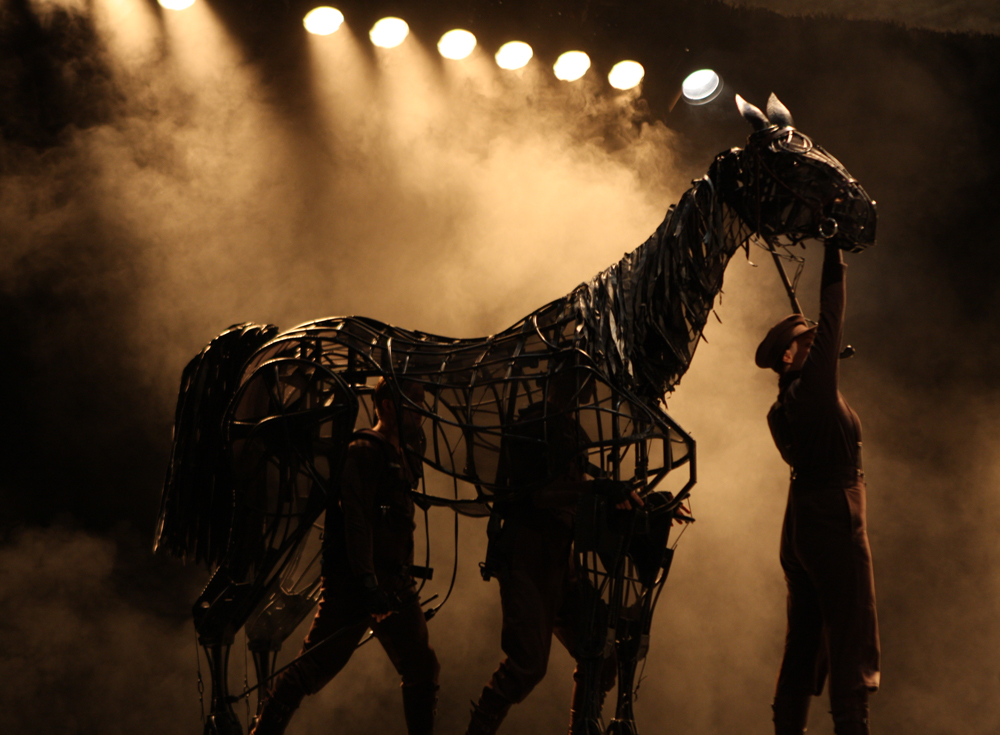.jpg "Key scenes in war horse")
Retrieved 16 June 2011. Battlefield Partnerships. Archived from on 5 September 2011. Retrieved 16 June 2011. Battlefield Partnerships. Archived from on 5 September 2011.
Retrieved 16 June 2011. Tyler, Mathew (10 June 2010).
Archived from on 19 August 2010. Retrieved 9 May 2011. ^. 16 August 2011. Retrieved 19 August 2011. Taylor, Jerome (19 June 2010).
Retrieved 27 February 2011. Haun, Harry (15 April 2010). Archived from on 24 May 2011. Retrieved 9 May 2011. Curtis Brown Literary and Talent Agency.
Retrieved 9 May 2011. ^ Grundy, Eddie (26 July 2010). Okehampton People.
Archived from on 14 March 2012. Retrieved 27 February 2011. Bloxham, Andy (4 December 2011). Retrieved 4 December 2011. ^ Powlson, Nigel (8 October 2010).
Retrieved 15 March 2011. Wadham, Jo (28 February 2011).
Retrieved 15 March 2011. Lezzeri, Theo (5 October 2010). St Wilfrid's School. Archived from on 18 March 2016. Retrieved 2 April 2011. ^ Williams, Matthew (16 October 2010).
Archived from on 9 March 2011. Retrieved 27 February 2011.
Schaefer, Stephen (30 December 2011). Boston Herald. Retrieved 5 January 2012. Armytage, Marcus (6 September 2010). Retrieved 20 September 2010. Nichols, Tristan (3 August 2010).
Archived from on 25 April 2011. Retrieved 20 September 2010. Small World News Service. 3 August 2010. Archived from on 8 December 2011.
Retrieved 17 June 2011. Weintraub, Steve (24 December 2010). Retrieved 26 December 2010. ^. 10 January 2012. Retrieved 16 January 2012.
Pearcy, Emma (6 August 2010). Archived from on 9 August 2010. Retrieved 20 September 2010. Dartmoor News Magazine. Archived from on 14 August 2011.
Retrieved 30 March 2011. Plymouth Ramblers.
Retrieved 30 March 2011. BBC News Online. 11 September 2010.
Retrieved 11 September 2010. Staff writer (27 October 2010). Retrieved 23 November 2010. Tapley, Kristopher (27 November 2011). Retrieved 2 December 2011. BBC News Online. 17 September 2010.
Retrieved 20 September 2010. Staff writer (14 August 2010).
Retrieved 17 August 2010. BBC News Online. 21 September 2010.
Retrieved 21 September 2010. 27 November 2011. Retrieved 28 November 2011. Staff writer (28 September 2010). Retrieved 27 February 2011. Jones-Berry, Stephanie (1 October 2010).
Retrieved 5 October 2010. ^ Stephenson, Hannah (18 December 2010). Retrieved 27 February 2011. 18 October 2010. Retrieved 8 May 2011. ^ Williams, Matthew (January 2011). Archived from on 26 December 2010.
Retrieved 15 March 2011. 23 October 2010. Retrieved 27 February 2011.
BBC News Online. 14 October 2010. Retrieved 25 October 2010. Archived from on 2 January 2013. Retrieved 15 March 2011. ^.
11 November 2010. Archived from on 17 July 2011. Retrieved 27 February 2011.
^ Edwards, Mike. Movie Vortex. Retrieved 1 April 2011. Mottram, James (25 March 2011).

Retrieved 25 March 2011. Calhoun, Dave. Retrieved 15 June 2011. 26 September 2010. Retrieved 15 June 2011.
^ Larson, Erica (18 November 2011). Retrieved 18 November 2011. ^ Moyes, Jojo (12 July 2011). Retrieved 12 July 2011.
Owens, Barb (1 December 2010). Retrieved 19 August 2011.
10 November 2011. Retrieved 14 November 2011.
10 November 2011. Retrieved 14 November 2011. Spinner, Karen (17 July 2011). Archived from on 10 December 2012. Retrieved 29 July 2011.
^. Retrieved 22 December 2011. (PDF). Hollywood Reporter. Retrieved 26 April 2014.
Solon, Olivia. Retrieved 21 December 2014.
^ Poland, David (16 February 2011). Movie City News. Retrieved 9 March 2011. Tonguette, Peter. Sense of Cinema. Retrieved 23 June 2011. Awalt, Steven (27 October 2011).
Retrieved 30 October 2011. Sousa, B.
(4 May 2011). Sousa Central.
Retrieved 5 February 2012. Hartley, Emma (12 August 2011). Emma Hartley's Glamour Cave. Retrieved 20 August 2011. Retrieved 28 October 2011.
WQXR’s 'Movies on the Radio. 22 October 2011. Retrieved 28 October 2011. Clark, Nick (29 March 2011). Retrieved 22 April 2011. de Semlyen, Phil (29 March 2011). Retrieved 10 May 2011.
The Wall Street Journal. 17 December 2011.
Retrieved 11 July 2016. ^ (PDF). DreamWorks Pictures. Retrieved 21 July 2016. Staff writer (17 February 2010). Retrieved 27 February 2011. Galloway, Stephen (2 December 2011).
The Hollywood Reporter. Retrieved 18 August 2018. Breznican, Anthony (28 September 2010). Retrieved 29 September 2011. ^ McClintock, Pamela (13 October 2010). Retrieved 27 February 2011.
de Semlyen, Phil (4 March 2011). Retrieved 8 March 2011. 28 October 2010. Retrieved 12 June 2011.
O'Hara, Helen (11 March 2011). Retrieved 11 March 2011. Hallett, Claire (16 March 2010).
My Blog, Indi-pen.com. Archived from on 8 February 2012. Retrieved 5 May 2011. McClintock, Pamela (29 March 2011). Retrieved 30 March 2011. War Horse official website.
Retrieved 29 June 2011. Child, Ben (29 June 2010). Retrieved 29 June 2011. Plumb, Ali (14 August 2011). Retrieved 19 August 2011. O'Hara, Helen (4 October 2011). Retrieved 4 October 2011.
Heritage, Stuart (5 October 2011). Retrieved 5 October 2011. Wales, George (18 November 2011). Retrieved 18 November 2011. Elmhirst, Sophie (17 November 2011). Retrieved 17 November 2011. Adams, Ryan (1 November 2011).
Retrieved 1 November 2011. 1 November 2011. Retrieved 1 November 2011. The Canadian Press. 10 November 2011. Retrieved 10 November 2011.
Stone, Sasha (27 November 2011). Awards Daily. Retrieved 28 November 2011.
Breznican, Anthony (22 November 2011). Retrieved 23 November 2011.
24 November 2011. Archived from on 31 January 2012. Retrieved 25 November 2011. Horse & Country. 8 November 2011. Archived from on 9 November 2011. Retrieved 8 November 2011.
O'Connell, Sean (25 November 2011). Hollywood News.com. Retrieved 28 November 2011. Ford, Allan (27 November 2011). Hollywood News.com. Retrieved 28 November 2011. Vary, Adam B.
(1 December 2011). Entertainment Weekly. Retrieved 2 December 2011. Puente, Maria (22 December 2011).
Retrieved 22 December 2011. Harper Collins Publishers. Retrieved 22 December 2011. Malone, Toby; Jackman, Christopher J. Adapting 'War Horse': Cognition, the Spectator, and a Sense of Play.
London: Palgrave Macmillan. Pp. 14–15. Schaaf, Chris.
Retrieved 23 March 2012. Gallagher, Brian (21 February 2012). Retrieved 23 February 2012. Retrieved 18 July 2019. Poland, David (25 November 2011). Movie City News. Retrieved 27 November 2011.
Marino, Joe (26 November 2011). The Daily Telegraph. Retrieved 27 November 2011. Retrieved 21 June 2012. Retrieved 20 June 2012.
Ebert, Roger (21 December 2011). The Daily Mail. Retrieved 22 December 2011. Retrieved 20 June 2012. Retrieved 21 June 2012. Corliss, Richard (7 December 2011).
Retrieved 13 December 2011. Winder, Simon (9 February 2012).
The Guardian. Retrieved 9 February 2012. David Denby. (2 January 2012). The New Yorker. Retrieved 30 January 2014. American Music Preservation.
Retrieved 30 January 2014. Academy of Motion Picture Arts and Science. 24 January 2012.
Retrieved 24 January 2012. American Cinema Editors.
Archived from on 22 March 2012. Retrieved 17 January 2012. 11 December 2011. Retrieved 12 December 2011. 17 January 2012. Retrieved 17 January 2012. Gallo, Phil (17 May 2012).
Retrieved 9 December 2012. Awards Daily.com. 13 December 2011. Retrieved 13 December 2011.
Awards Daily. 1 January 2011.
Retrieved 2 January 2011. Chicago Film Critics Association. 16 December 2011.
Retrieved 18 December 2011. ^. 15 December 2011. Archived from on 29 October 2012.
Retrieved 15 December 2011. Retrieved 11 December 2011. Awards Daily.com. 10 December 2011. Retrieved 11 December 2011. Awards Daily.
20 December 2011. Retrieved 20 December 2011. Retrieved 29 February 2012. Archived from on 12 June 2010. Retrieved 4 December 2011. Awards Daily.
3 January 2012. Retrieved 5 January 2012. Retrieved 2 December 2011. Awards Daily.com. 19 December 2011.
Retrieved 19 December 2011. Visual effects society. Retrieved 31 December 2017. Retrieved 4 December 2011.External links. on.
at. at. at. atPhotographs.